Choose the architecture
Assess the relevance of a private, dedicated public or hybrid network according to sites, uses, mobility and sovereignty requirements.

Critical mobile networks
Architecture, coverage, multi-operator governance and security: the conditions for a 4G/5G service equal to industrial, sovereign and operational environments.
Speak with an expert →The framework
In industrial, sovereign or public-safety environments, a mobile network connects field uses with coordination capabilities. It can only do so while retaining control over data, identities, traffic priorities and recovery conditions.
Its architecture must be designed around the service it supports, rather than added as an afterthought.
Experience
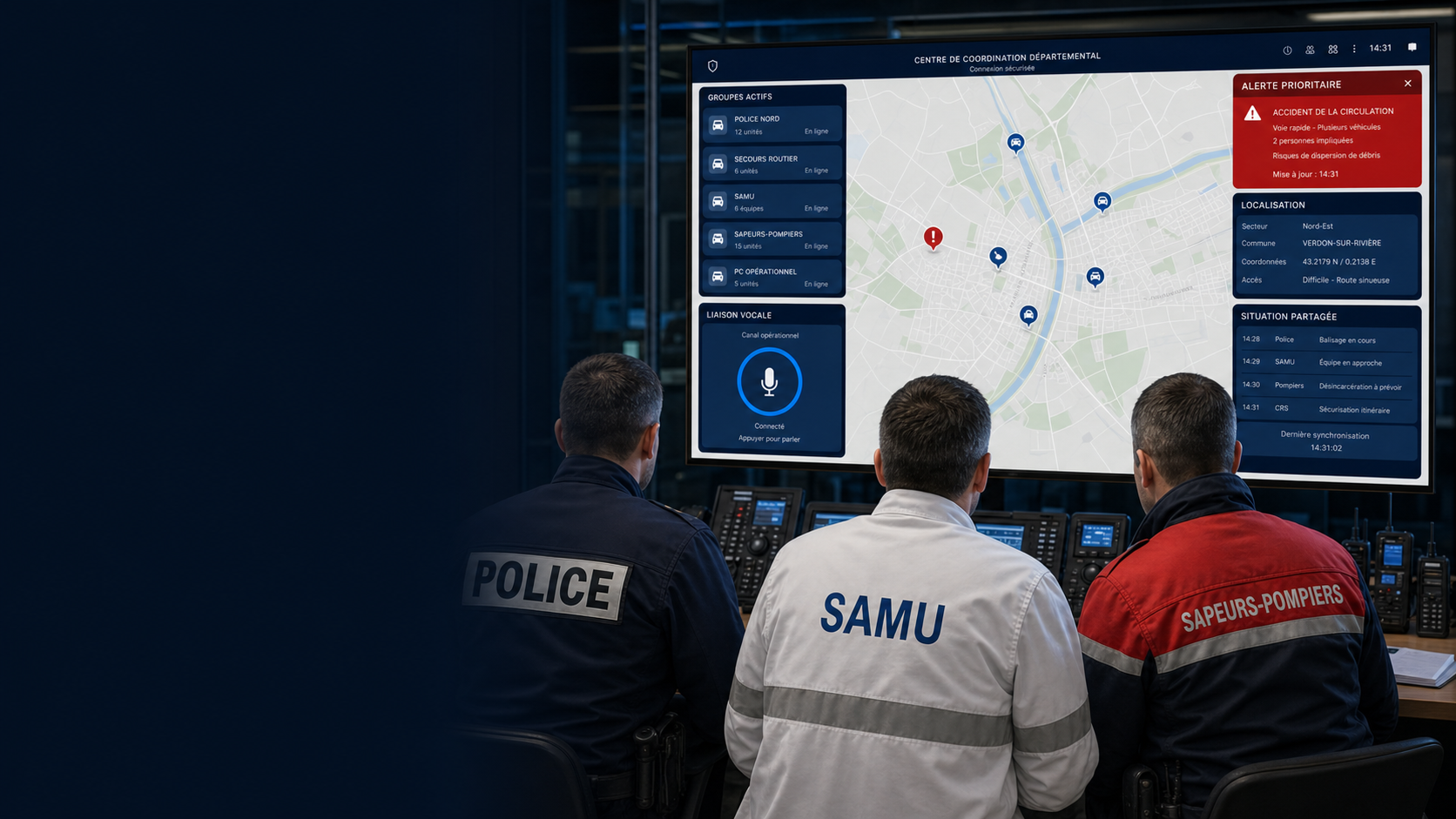
Delivering the Future Radio Network and leading the NexSIS 18-112 programme required integrating 4G/5G infrastructure, availability, multi-operator governance, use prioritisation and end-to-end security across French public-safety and emergency services.
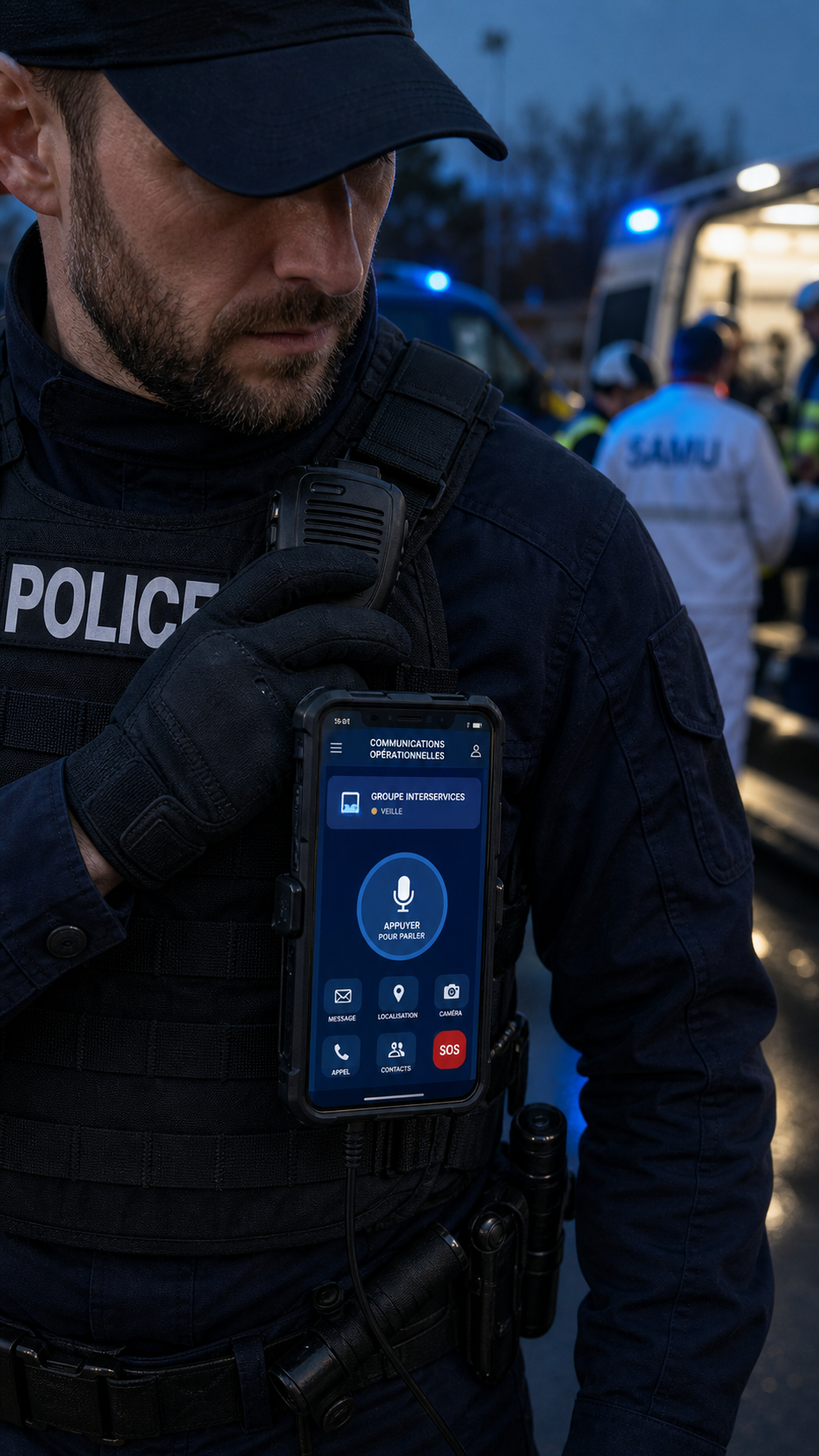
This experience also encompasses LTE/5G MCX technologies, delivering advanced multimedia services and strengthening situational awareness in a crisis: group management, communication priority and pre-emption, emergency calls, geolocation, and real-time data and video sharing.
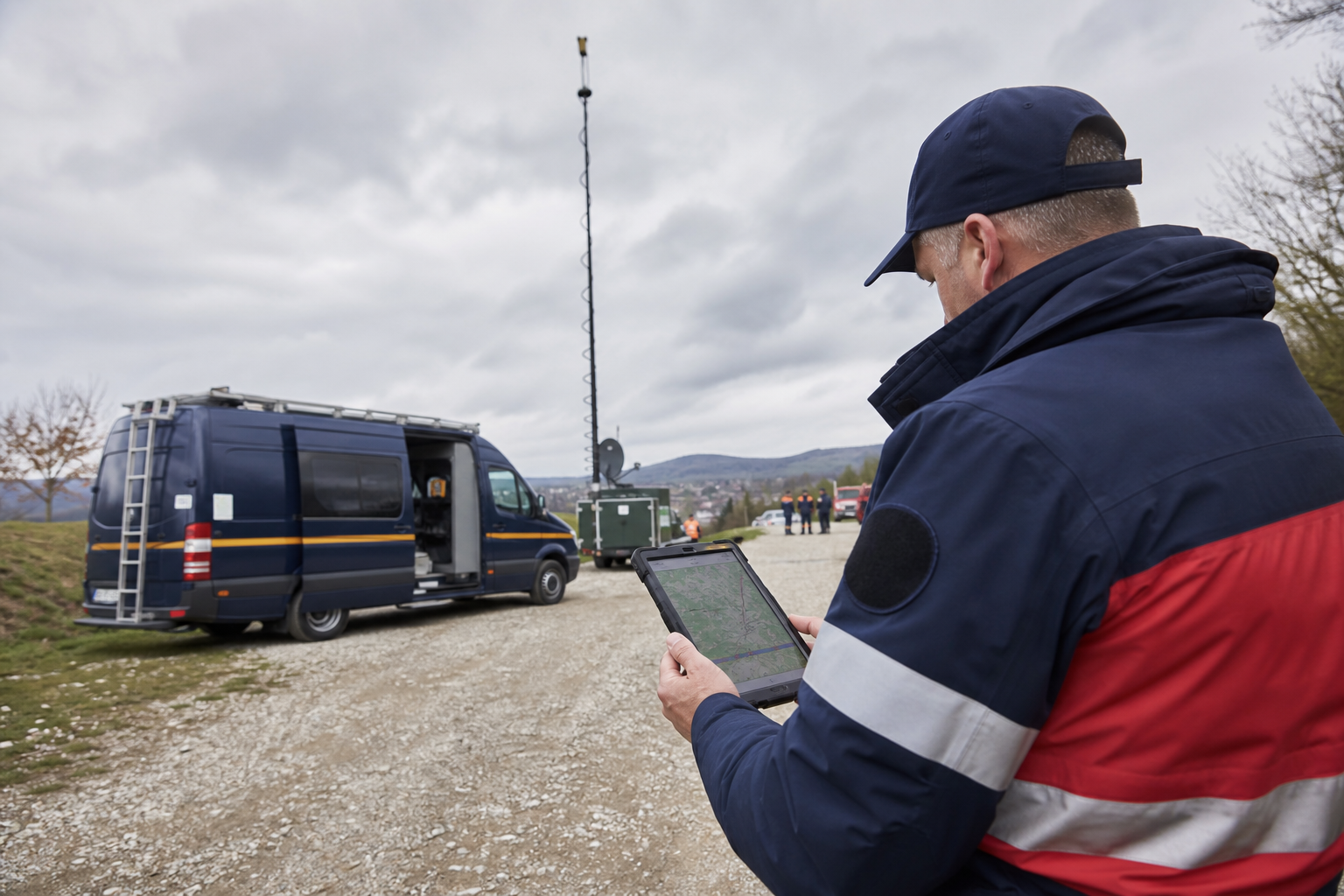
It enables sound choices between a dedicated public network, an autonomous private network or a hybrid model, followed by long-term deployment, supervision and operations.
The key decisions
Criticality does not come from a single technology. It is built through the coherence between operational need, architecture, security and operating arrangements.
Assess the relevance of a private, dedicated public or hybrid network according to sites, uses, mobility and sovereignty requirements.
Size coverage, capacity, power availability, backhaul and prioritisation for the uses that cannot wait.
Clarify responsibilities between operators, integrators, operators and business teams from the outset.
Bring identities, segmentation, encryption, supervision and business continuity into one operating model.
Application environments

Assess the role of a private 5G network for production lines, robotics, remote maintenance, sensors and supervision tools.
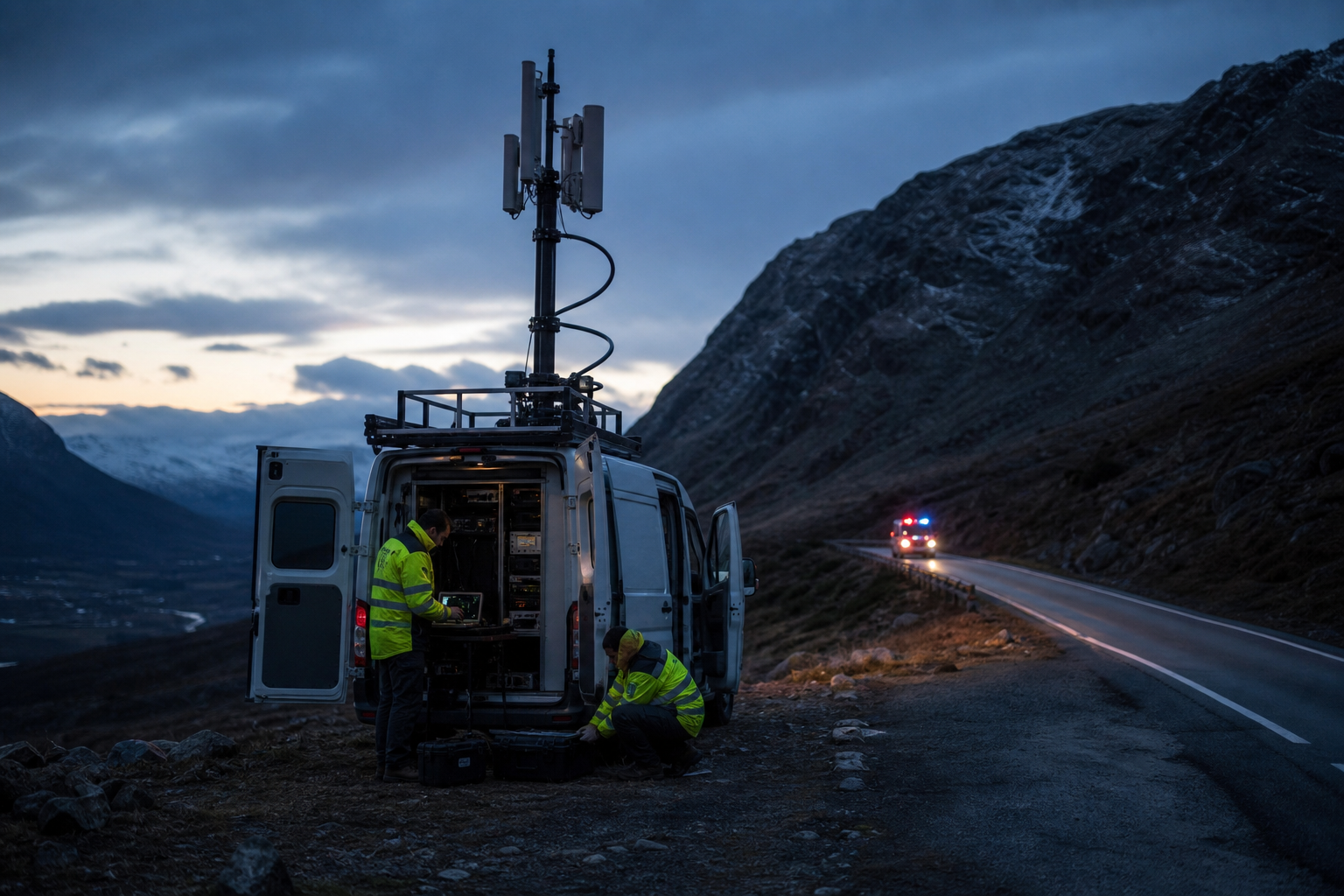
Prepare networks for security, emergency or defence missions: deployability, continuity, information sharing and resilience under degraded conditions.
How we support you
Qualify uses, site constraints and the operational value of a dedicated mobile network.
Compare architecture scenarios, prepare decisions and set coverage, security and sovereignty requirements.
Organise the deployment path: migration, interconnections, qualification and scaling.
Set protection, supervision, governance and operational maintenance, then test resilience in degraded conditions.
Critical mobile networks
Architecture, coverage, multi-operator governance and security: the conditions for a 4G/5G service equal to industrial, sovereign and operational environments.
Speak with an expert →The framework
Within industrial, sovereign or public-safety environments, a mobile network connects field uses with coordination capabilities. It must retain control over data, identities, traffic priorities and recovery conditions.
Its architecture has to be designed around the service it supports, not added as an afterthought.
Experience
The Future Radio Network and NexSIS 18-112 required the integration of 4G/5G infrastructure, availability, multi-operator governance, prioritisation and end-to-end security.
LTE/5G MCX services extend this experience: priority group calls, alerts, geolocation, data and video exchanges, and field terminals. These building blocks must remain coherent with the network, identities and coordination centre.
The key decisions
Criticality is built through the coherence between operational need, architecture, security and operating arrangements.
Assess a private, dedicated public or hybrid network based on sites, uses and sovereignty requirements.
Size coverage, capacity, power, backhaul and the prioritisation of essential uses.
Clarify responsibilities between operators, integrators, operations teams and business teams.
Bring identities, segmentation, encryption, supervision and business continuity together.
Application environments
Assess the role of a private 5G network for robotics, remote maintenance, sensors and supervision.
Prepare networks for security, emergency and defence missions, including degraded conditions.
How we support you
Qualify uses, site constraints and the value of a dedicated mobile network.
Compare architecture scenarios and set coverage, security and sovereignty requirements.
Organise deployment: migration, interconnections, qualification and scaling.
Set protection, supervision, governance and operations, then test resilience under degraded conditions.